Wow, March Already?
March is already here, and I am certainly ready for it. The end of standard time is always a great time for me, as the late sun is inspiring.
Before I go any further, I need to state that I do run a summer D&D camp, and you can sign up for it here. It is in Durham, North Carolina, and the kids seem to think it is fun, or they are kind enough to lie to me about it.
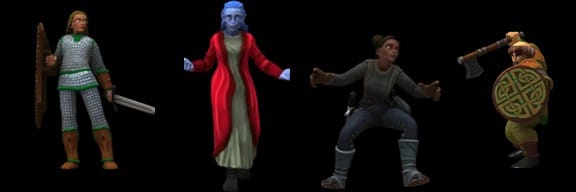
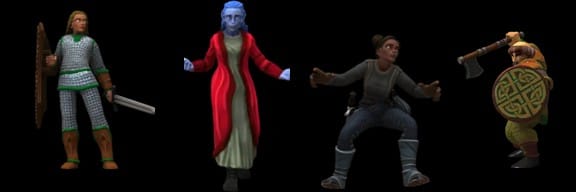
I am excited for this month as I start preparing for the summer D&D camp I run. I'm getting ready to create my list of figures and collect them for the camp, and then I will work on my maps. In previous years, I started a bit earlier, as I generally gather between 1,000 and 2,000 figures for the summer. For the last few years, I have been printing and painting these figures, starting in January, but in the last few months, I have been creating a catalogue of my figures and sorting them in a way that makes them easier to find, so I am hoping to only have to print and paint about a hundred this year.
But to recognize this task I will be starting this month, and in the tradition of the year starting in the spring, I think I will focus on a theme this month: “Prep is Play.” Tabletop roleplaying prep is often seen as a chore that game masters are forced to endure to have an excellent game that night. More recent generations of RPGs have even focused on reducing this chore, transferring some of it to players or even eliminating it in total. I don’t disagree that preparation can be a chore; one of my tasks for this month is to create a template for me to adapt some recent adventures into the style and format of an Adventurer’s League scenario, a definite “Prep is Work” scenario.
Unfortunately, treating preparation as work or a chore to be done places a huge and unfair burden on the game master. After all, for the players, we talk about the idea of lonely fun, things such as creating multiple characters and backstories, which can be done alone. Certain games have intentionally emphasized this “lonely fun” concept, like when creating characters is itself a mini-game that can be done on one’s own like Traveler’s procedural character creation which is a roleplaying experience in itself (as has the same potential for injury, or in previous editions, death as an actual adventure) or the hyper-complicated long-term mapping that many players do for level and feat games like Dungeons and Dragons or Pathfinder. Game master preparation should be treated as play itself.
Before I get into weird specifics and the great joy that comes from comparing paint shades on primed sprues, let me give game masters what I consider the most important tenet of “prep is play”: make sure your prep is something that you enjoy doing. I, for example, really enjoy the crafting element of making three-dimensional accessories, even though I believe that, in general, these things take away from roleplaying, especially maps and miniatures. But I run for kids, who really enjoy seeing new and novel miniatures, or the return of hated and feared monsters, such as the “Omnomnom” (what they call an Otyugh). On the other hand, I am not a big fan of tinkering with rules, so I tend to prefer rules systems that are mature and can explicitly handle most situations with rules as written, either ancient systems that have grown into this role, like Basic Roleplaying and it’s derivatives, and Traveler; thoroughly designed newer systems like Pathfinder Second Edition; or narrative systems that have a very clear (and possibly narrow) focus like many Powered By the Apocalypse games.